Board Meeting Minutes
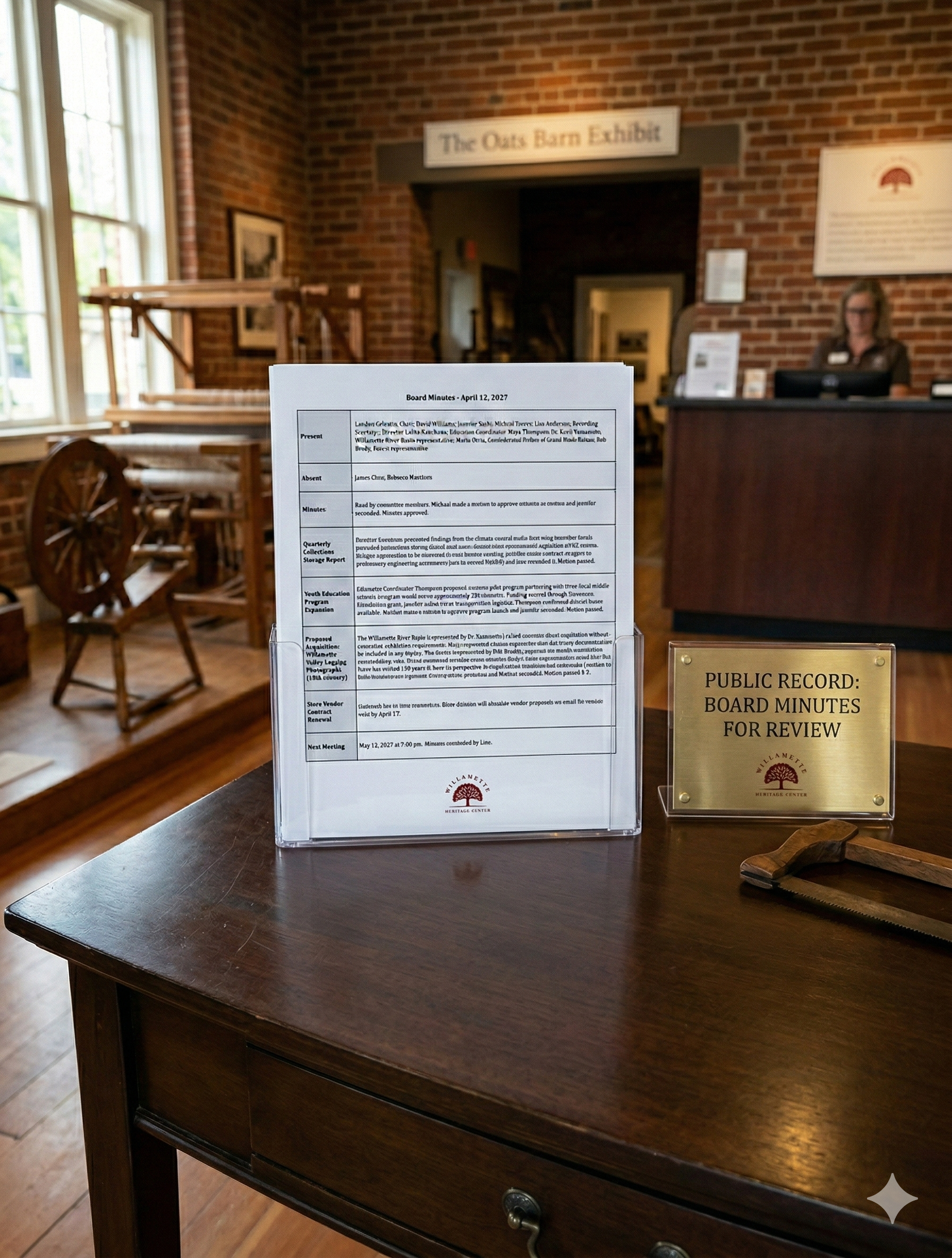
Board Meeting Minutes is dated April 12, 2027, and attributed to the Willamette Heritage Center, a real institution in Salem, Oregon, that preserves the agricultural and settler history of the Willamette Valley. The valley is a 150-mile-long corridor running through western Oregon, bordered by the Cascade Range to the east and the Coast Range to the west. The Willamette River runs north through this valley to join the Columbia. For at least ten thousand years, the Kalapuyan peoples, many of whose descendants are now part of the Confederated Tribes of Grand Ronde, managed this landscape through seasonal burning, camas cultivation, and salmon weirs, shaping the oak savannas and wetland prairies that settlers would later call a promised land. By 1855, the Willamette Valley treaty ceded the entire river drainage to the United States, and the Kalapuyan tribes were moved to the Grand Ronde Reservation. Today, the Confederated Tribes of Grand Ronde work with the Willamette Valley Historical Ecology Project, in partnership with the University of Oregon’s Museum of Natural and Cultural History and Portland State University, to document how Indigenous communities used, maintained, and changed this environment over thousands of years. The liaison at the board table in 2027 is already familiar with the valley's institutions.
The document in the acrylic holder follows standard governance procedures: agenda items, motions made and seconded, votes recorded. A Quarterly Collections Storage Report. A Youth Education Program Expansion. A Store Vendor Contract Renewal deferred because of time constraints. And buried among these mundane items, under the heading "Proposed Acquisition: Willamette Valley Logging Photographs (19th Century)," is a sentence that stretches time: "The River has waited 150 years to have its perspective included in this narrative." Motion to table pending development of co-curation protocols. Motion passed 4-1.
What had to change for that sentence to appear in board minutes?
The answer is not as speculative as it seems. Around the world, legal systems are being created based on the idea that rivers, forests, and plant species are not property but persons—entities with rights, interests, and standing. Ecuador was the first country to formally recognize the rights of nature in its constitution in 2008. Bolivia passed its Framework Law on Mother Earth in 2012, giving legal personhood to natural systems. In 2017, the New Zealand Parliament recognized Te Awa Tupua, the Whanganui River, as, in the words of the legislation, "an indivisible and living whole, comprising the Whanganui River from the mountains to the sea, incorporating all its physical and metaphysical elements," with all the rights, duties, and liabilities of a legal person. The Whanganui Iwi fought for that recognition for 150 years, guided by a principle that needed no legal translation until now: *Ko au te Awa, ko te Awa ko au. [I am the River, and the River is me.]
In 2021, wild rice sued the state of Minnesota. Manoomin [pronounced muh-NOO-min], sacred food, creation story, keystone species, became the lead plaintiff in Manoomin et al. v. Minnesota Department of Natural Resources, filed in White Earth Tribal Court after the state issued a permit allowing Enbridge to withdraw five billion gallons of water from wetlands during pipeline construction. It was the first rights-of-nature case filed in a tribal court, and while it was ultimately dismissed due to jurisdictional issues, its significance, as one attorney noted, lay not in its outcome but in its action: manoomin itself as plaintiff, translating a centuries-old Anishinaabe philosophical tradition into the language of contemporary law.
Robin Wall Kimmerer, botanist and citizen of the Potawatomi Nation, has written about what it means to speak a language that recognizes plants and rivers as living beings—a language where the question "what is it?" does not fit, because nothing is merely "it." In her view, the grammar of animacy is not a metaphor; it reflects a different reality, where kinship with the natural world is not just a feeling but an established fact. The rights-of-nature movement seeks to adapt Western legal systems to recognize a concept that many Indigenous legal traditions have always upheld: that some entities exist not to be owned but to exist in relationship with.
The Whanganui Regional Museum, located in the same city as the river that now has legal personhood, already operates with a governance structure based on this idea. Its board has two houses: a Tikanga Māori House with representatives from the iwi and hapū of the region, and a Civic House representing the wider community. Any business before the board must prove it aligns with the Treaty of Waitangi and includes adequate consultation between partners. The museum and the river's governance share these principles, forming the same redefined connection between human institutions and the communities—and landscapes—they serve. The fiction of Board Meeting Minutes is built from this existing structure, projected three years into the future and set in the Pacific Northwest.
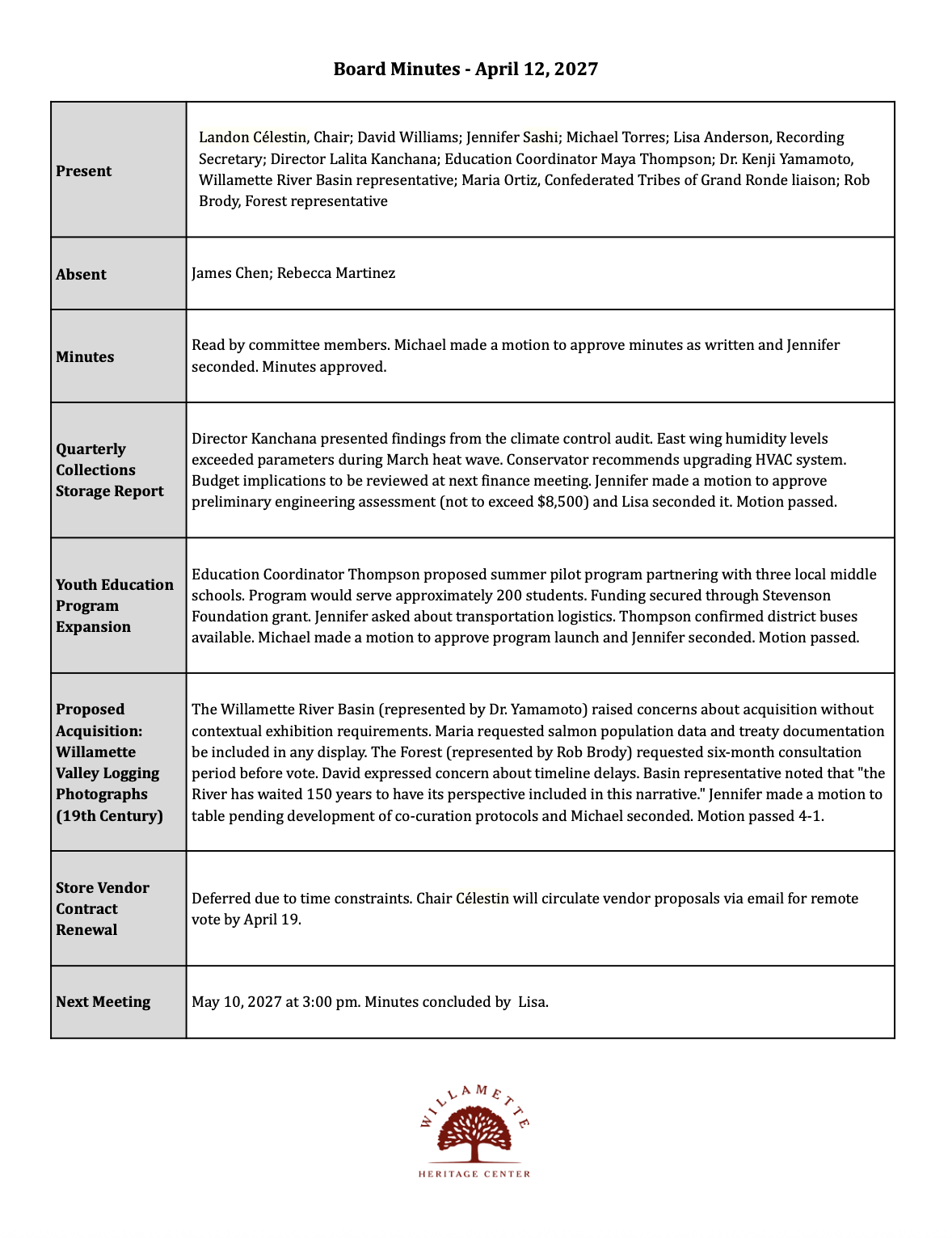
What the artifact suggests is not that natural entities will gain legal status overnight but that institutions, including cultural ones like museums, are where that status becomes actionable.
Governance is where abstract rights meet real decisions.
A river can have personhood, but until someone attempts to acquire a collection of 19th-century logging photographs that document the valley's extraction history without consulting the river's legal representatives, the concept of personhood stays theoretical. The board minutes make it tangible. Dr. Yamamoto, the River Basin representative, raises concerns about acquisition without appropriate contextual exhibition requirements. Maria Ortiz requests data on salmon populations and treaty documentation before any display. Rob Brody, representing the Forest, asks for a six-month consultation period before the vote. And someone, David, voices concerns about potential delays, expressing a familiar anxiety about slow institutional processes. Motion to table. 4-1.
That vote carries significant weight. The River has a representative who can clearly communicate, in straightforward governance language, what 150 years of exclusion from its own narrative entails. The minutes do not explain any of this. They don't need to. Minutes record outcomes, not debates. This restraint is part of what makes the form so impactful as a tool for speculative design: the texture of routine bureaucracy contains a transformed set of assumptions about who has a place in the room.
Design fiction creates a future that is understandable through its artifacts instead of its arguments. An essay about expanded museum governance can illustrate the possibility; a printed board minutes document from 2027 allows you to feel the weight of the acrylic holder, the slight formality of the table format, the motions made and seconded in a room where the Willamette River has a seat. Stuart Candy and Jake Dunagan, whose work on experiential futures influences much of contemporary design fiction, have described this as the difference between futures that are understood and futures that are felt—the difference between knowing something is possible and experiencing, even for a brief moment, a world where it is already real.
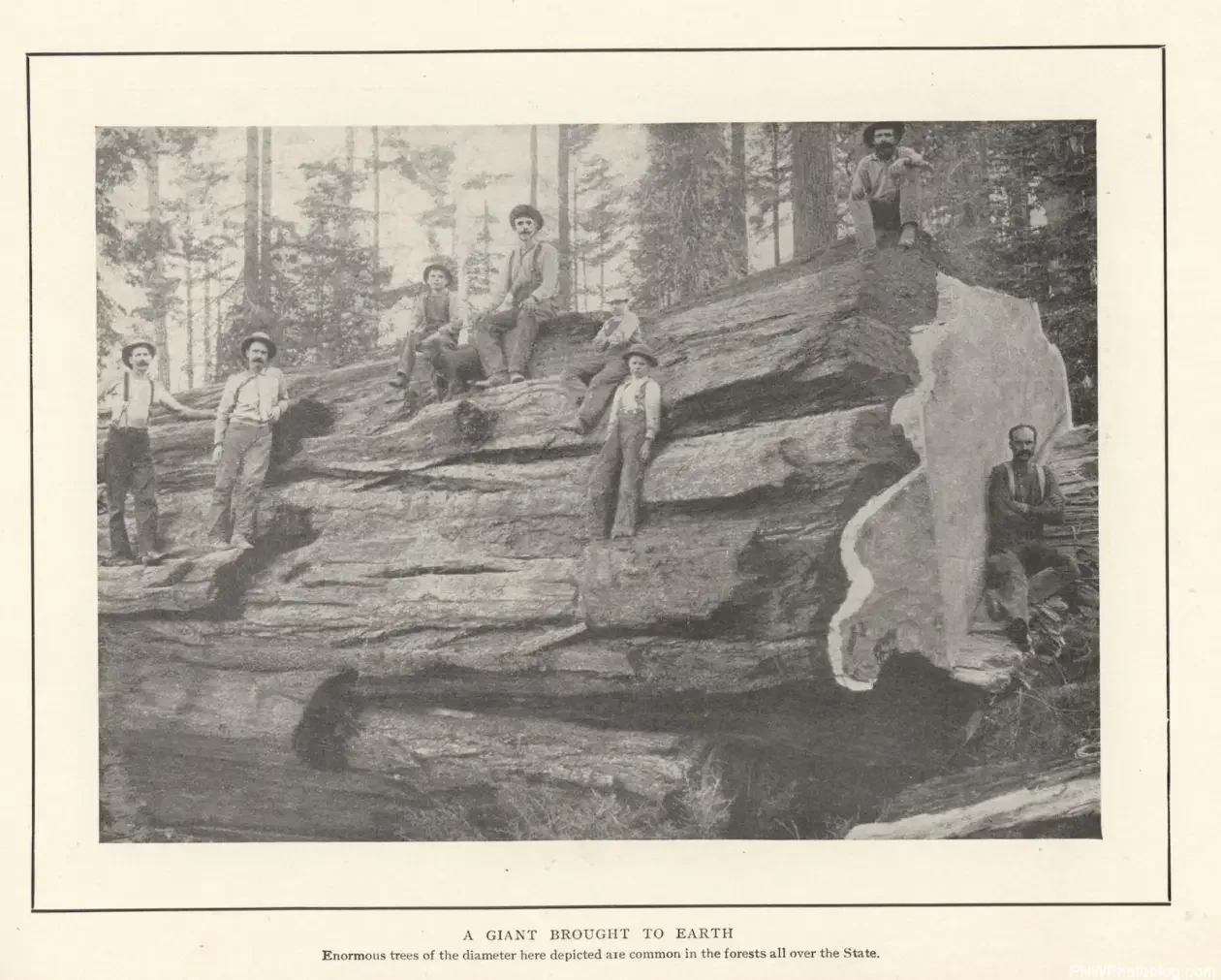
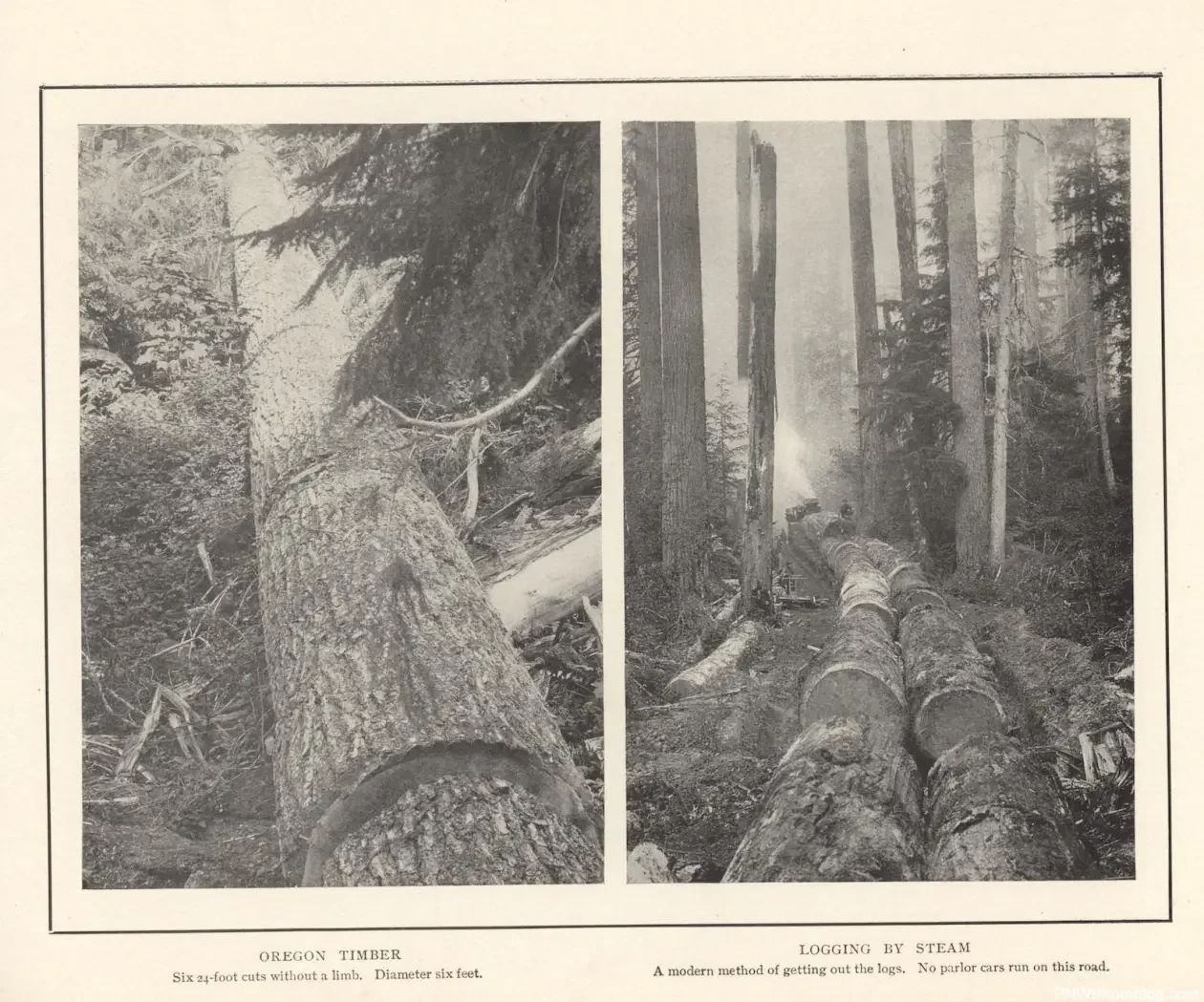
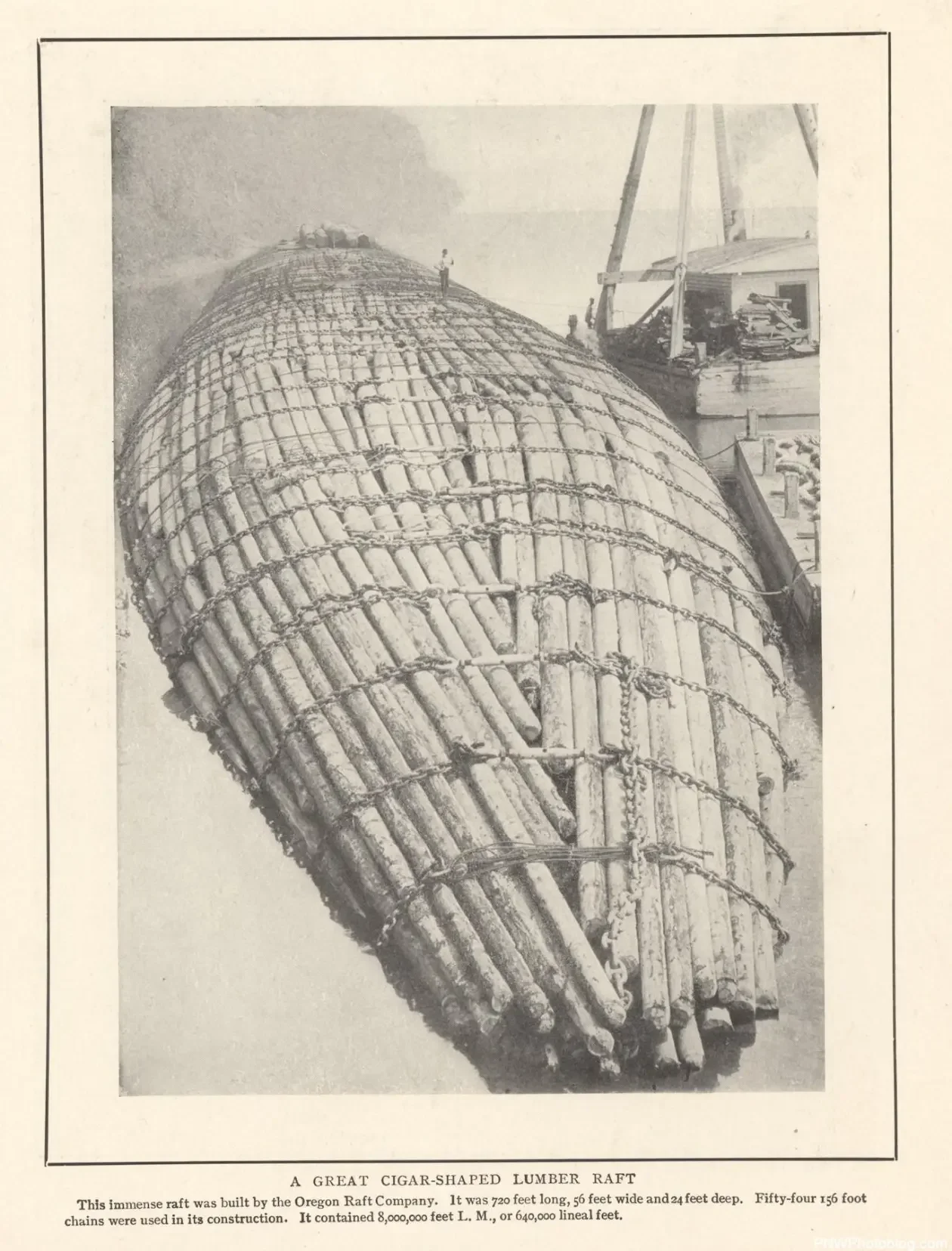
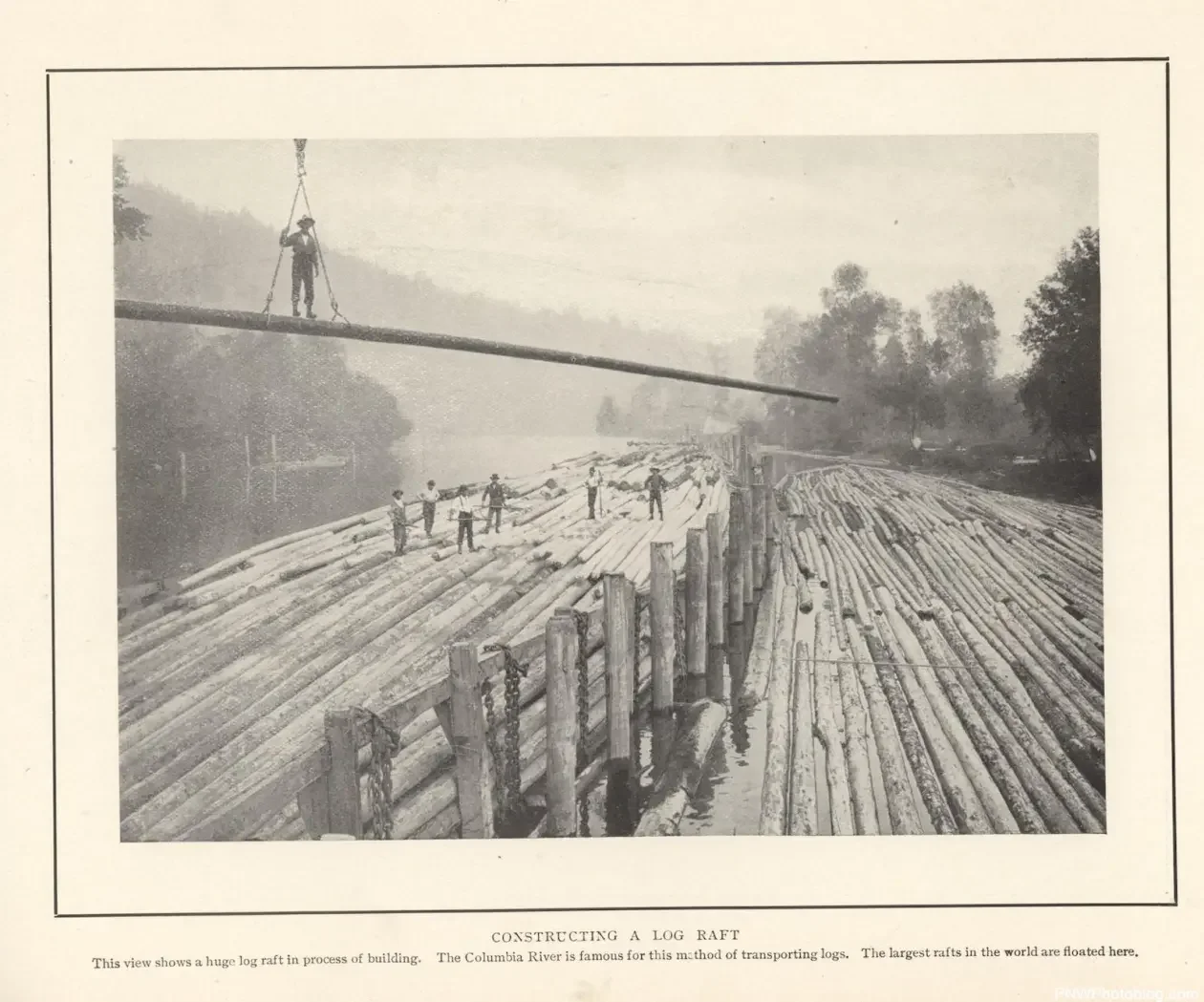
They document an era of extraction—timber taken from the valley that the Confederated Tribes of Grand Ronde had called home for generations before their removal, water diverted from the river that the Basin representative now protects. A heritage center acquiring those photographs without considering the River's perspective would be doing what heritage centers have always done: telling a story from the viewpoint of those who took from it. The motion to table does not reject the collection. It rejects that narrow narrative.
What would it mean to acquire those photographs with co-curation protocols in place? What would the exhibition look like if the River's perspective were included? The board minutes don't answer those questions. They open them — and in opening them, they suggest that museums are not just repositories of the past but active participants in whose past gets told, and from whose point of view, and with whose consent. The 4-1 vote makes one thing clear: not everyone in the room is ready to move slowly enough for that. One person voted against tabling. The deliberation is real, the outcome uncertain.
The document sits in the entryway. Imagine a visitor picks it up, expecting something familiar — the ordinary record of institutional governance. They find, instead, a future that is already being assembled in fragments: in New Zealand's river law, in an Ojibwe tribal court, in a museum on the Whanganui that has already divided its board between two houses, in the grammatical structures of languages that have always known the forest as a relative. Board Meeting Minutes doesn't invent this future. It gathers what is already possible, puts it in a table format with headers and a logo, and leaves it where anyone might pick it up.
That is what design fiction, at its most precise, does. It makes the present visible by showing us the paperwork of a future it is already becoming.
Access the full board minutes PDF hereBoard Meeting Minutes is part of an ongoing series of design fictions examining how cultural institutions might change when they genuinely yield—to the collections, ecologies, and timeframes they claim to manage.