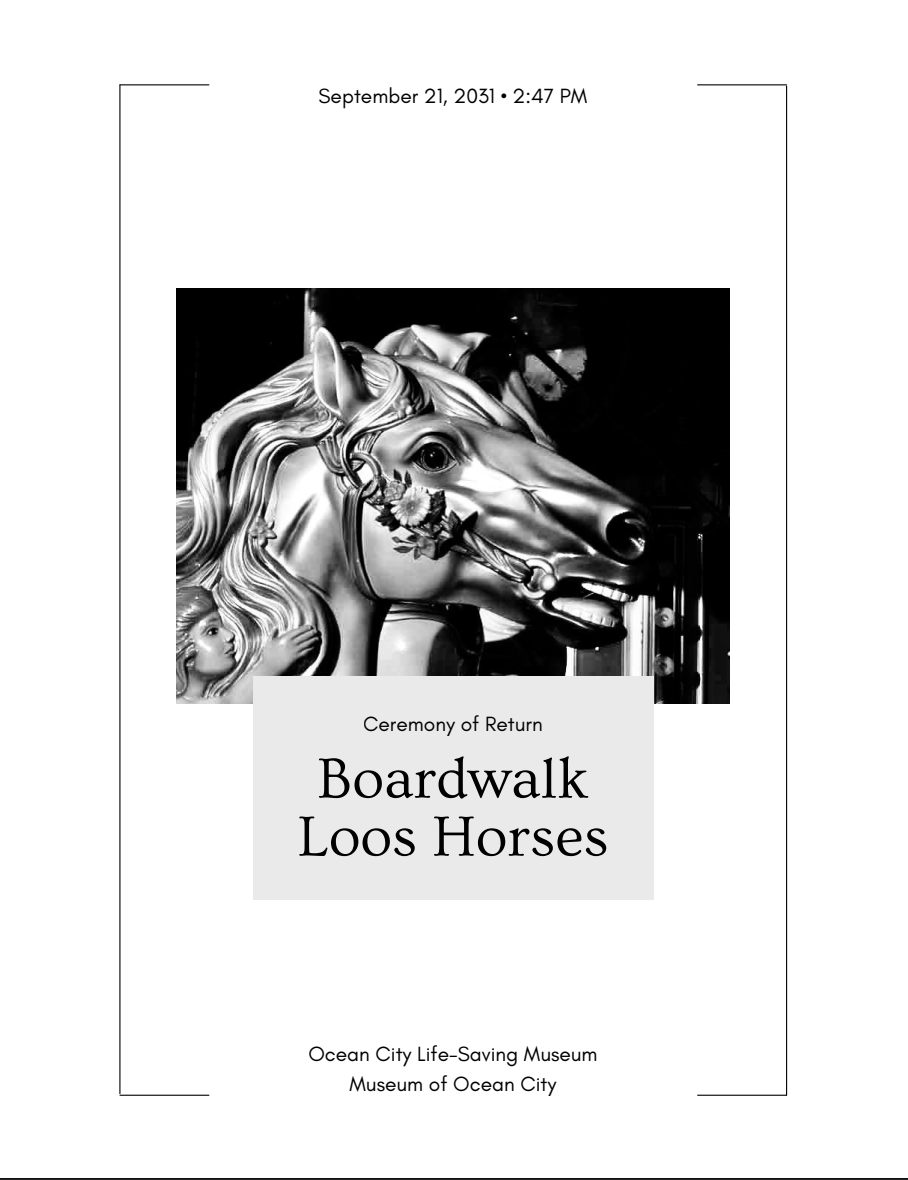
Ceremony of Return
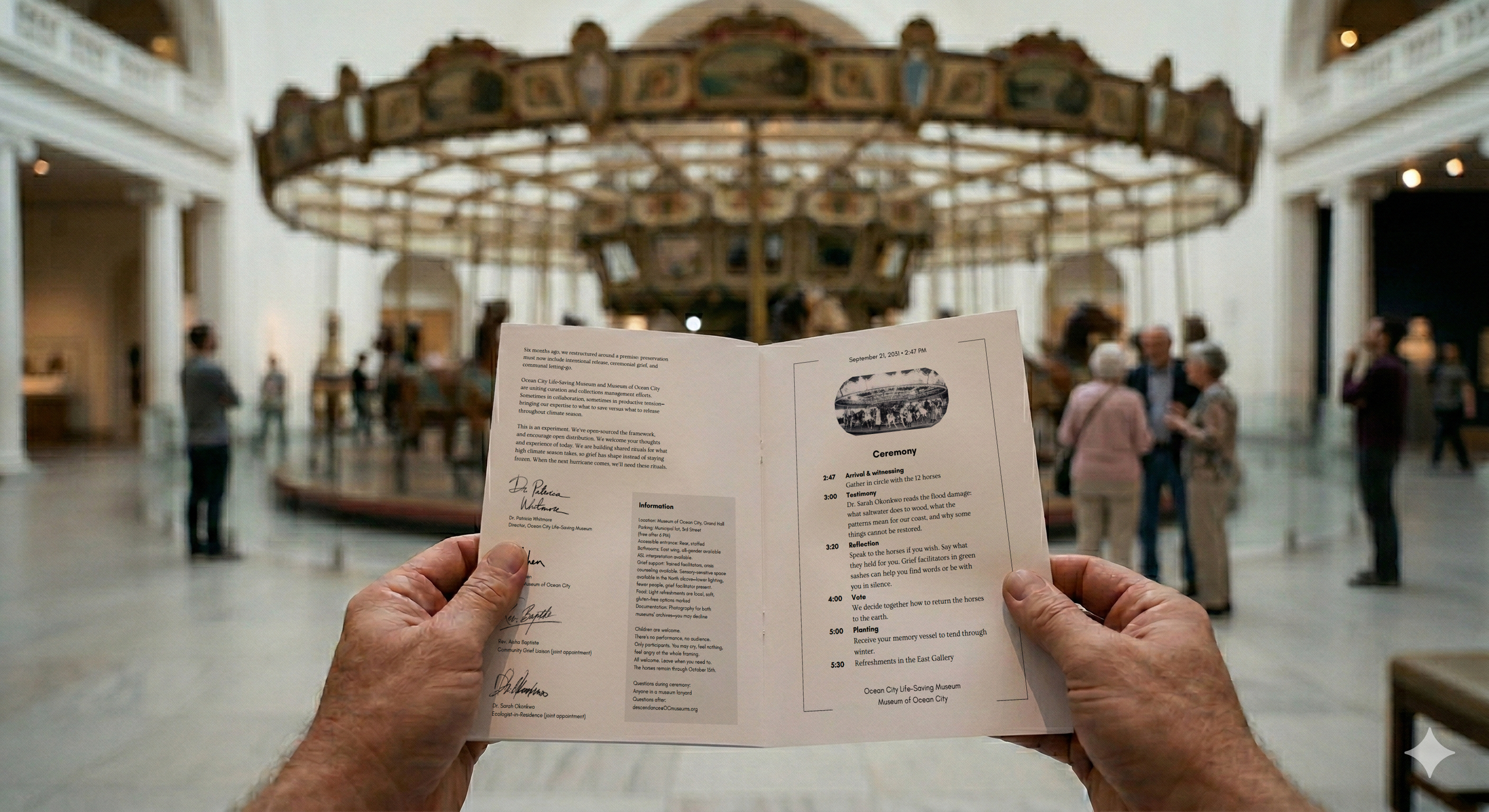
This photo was taken September 21, 2031.
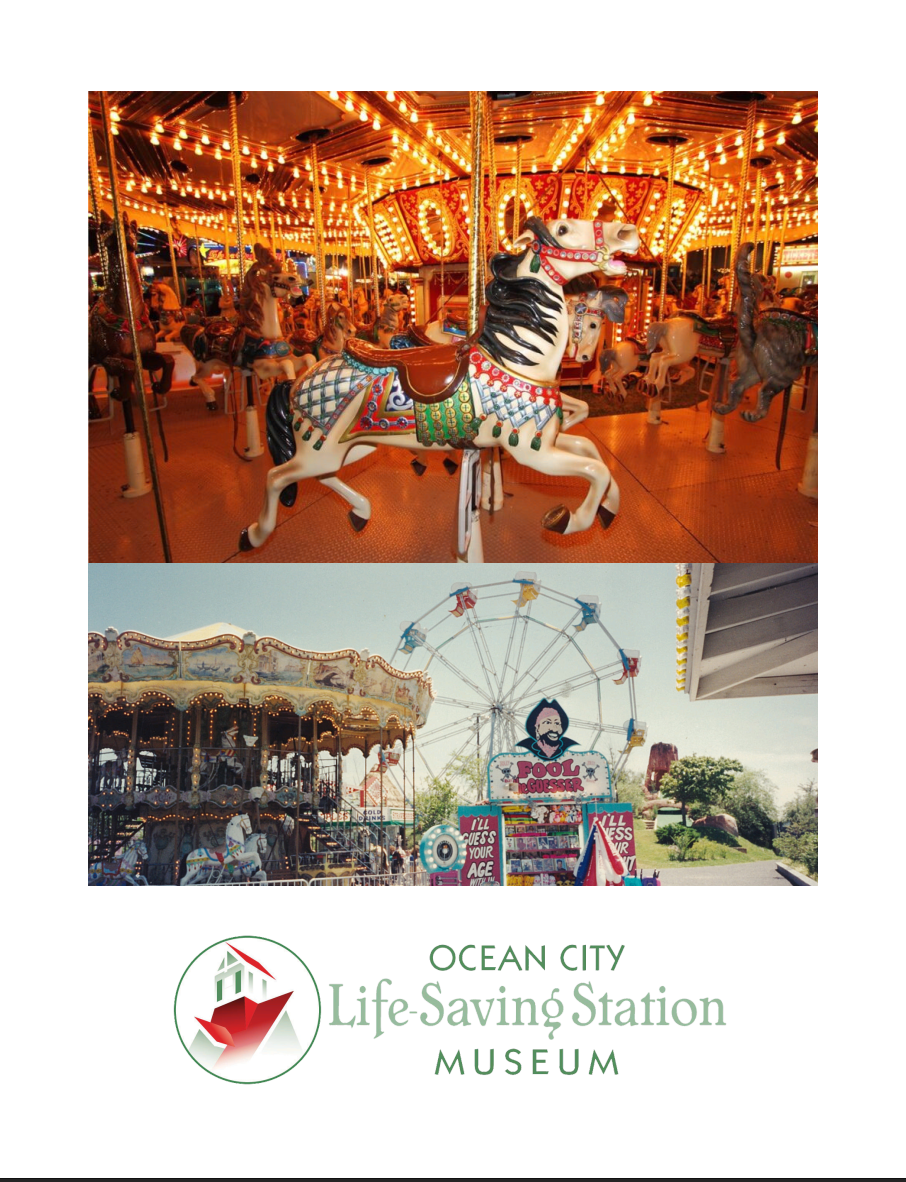
Two small institutions on Maryland's coast—the Ocean City Life-Saving Museum and the Museum of Ocean City—will gather their community around twelve carousel horses damaged beyond restoration in a climate flood. Together, they will witness testimony about saltwater and wood. Speak to the horses. Vote on how to return them to the earth. Receive memory vessels to tend through winter.
This ceremony has not happened yet. The program is speculative, an artifact from a possible future. But the questions it asks are immediate: What happens to museums when preservation itself must evolve? What does it mean to steward collections when holding on becomes its own form of harm? And what rituals might we need when climate change forces us to let go of things we love?
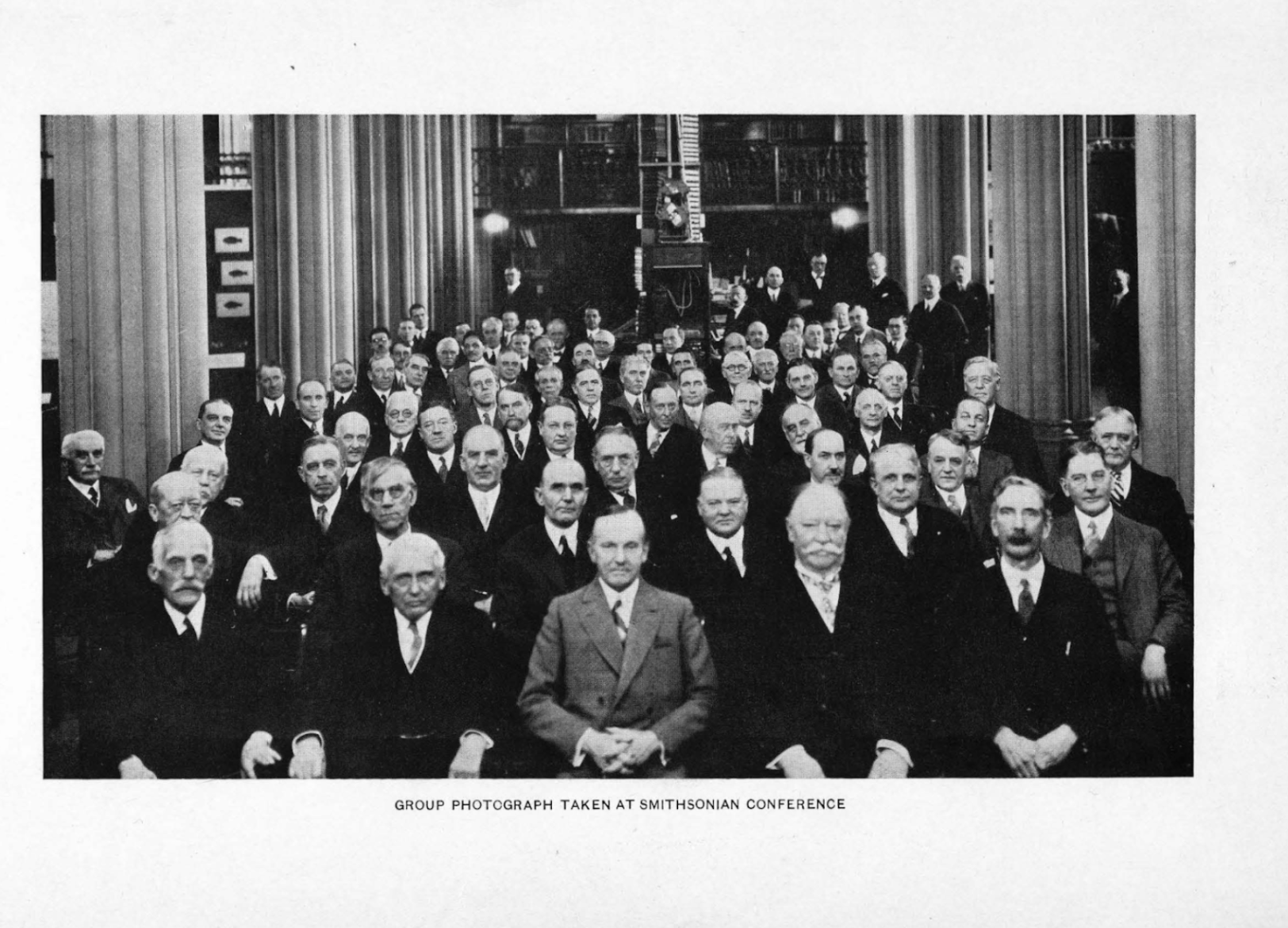
In 1927, accomplished men gathered at the Smithsonian to imagine the institution's future.
A speaker described how the Smithsonian arose from "the struggle to harvest natural resources that will last for a long time." Another framed its role as "ordering chaotic nature into useful knowledge."
Looking back, we can see what they couldn't: harvest meant extraction, abundance had limits, and mastery brought consequences.
This is the nature of paradigms—they're invisible to those operating within them. Which raises an uncomfortable question: What will be glaringly obvious to museum workers in 2125 when they look back on us?
Perhaps our unwillingness to be influenced by forces larger than ourselves—nature, climate, planetary systems. We are almost 100 years from that 1927 conference, and we still default to control. Our institutions were shaped by and helped shape colonialism, capitalism, and extraction. Even our most progressive preservation practices assume human dominance: we can stop decay, manage environments, and keep things forever if we try hard enough.
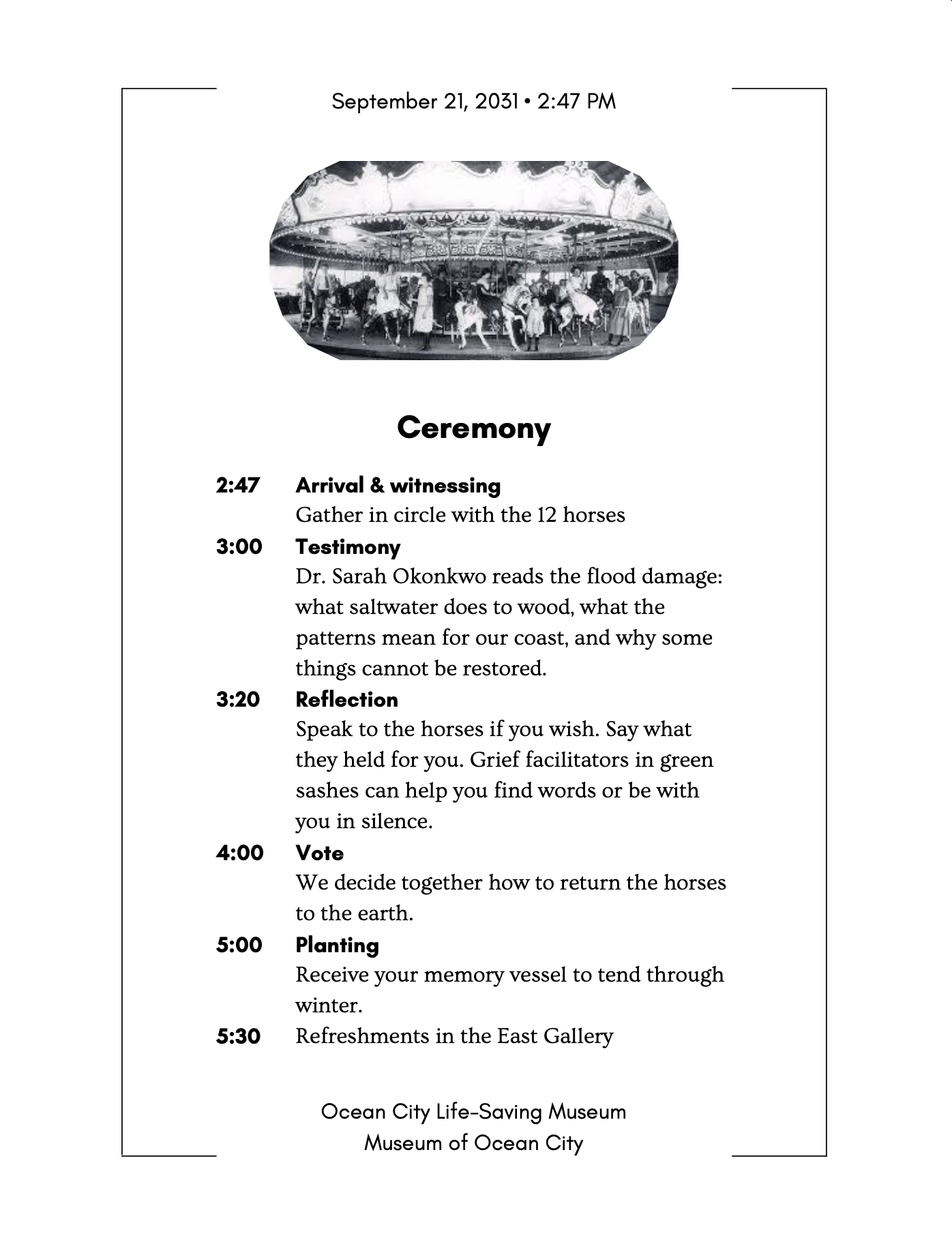
The Ceremony of Return imagines otherwise.
It proposes that "preservation must now include intentional release, ceremonial grief, and communal letting-go."
This is not abandonment or institutional failure. It is a recognition that stewardship sometimes means acknowledging when saltwater damage cannot be reversed, when restoration would erase the flood's testimony, when the most ethical choice is letting objects return to the earth with intention and ceremony rather than keeping them deteriorating in storage indefinitely.
Museums could become places for collective climate grief. When floods or fires destroy community treasures, rituals could honor lost objects—mourning together, returning them to the earth, sharing their stories. The Ceremony of Return offers a concrete model: grief facilitation as museum practice, ecological testimony as curatorial expertise, community voting on deaccession as democratic ritual.
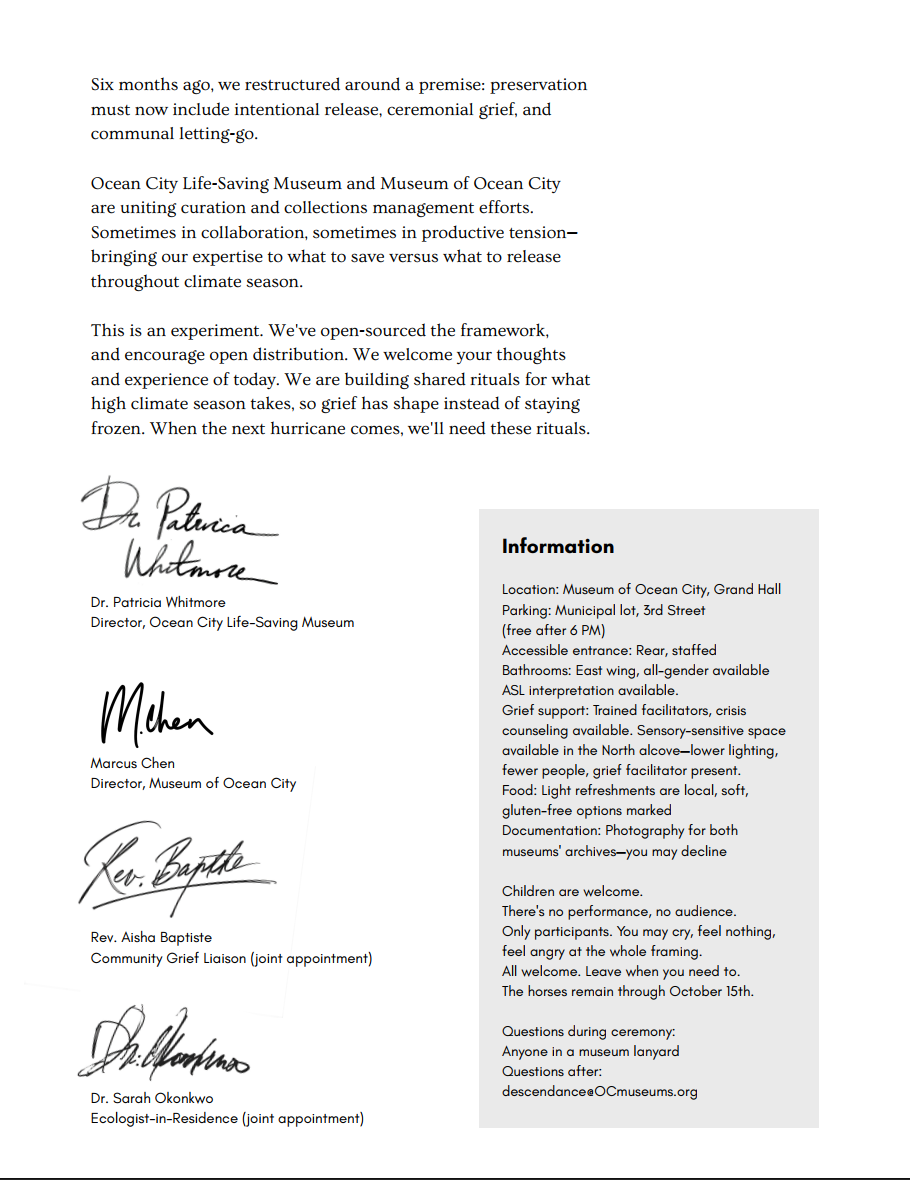
Notice what shifts when museums position themselves this way.
The two institutions don't just collaborate on collections management—they create joint appointments for a Community Grief Liaison and an Ecologist-in-Residence.
These aren't metaphors. They are structural acknowledgments that museums operating in "high climate season" need different expertise than those operating in presumed stability. The program's information section doesn't just list accessible bathrooms and ASL interpretation. It names "sensory-sensitive space available" and "crisis counseling available," treating grief support as essential infrastructure, not supplemental service.
The ceremony stages rupture not as a single catastrophic event but as ongoing condition. Climate season isn't over. The ceremony happens in September; the horses remain on view through October 15th; winter brings memory vessels to tend. The flood has already happened. More floods are coming. The museum exists in this continuous transformation.
But what, exactly, is being transformed?
The horses themselves return to earth, their meaning dispersed into memory vessels and carried by community members through winter. The museum-as-preservation-machine dissolves and becomes something else—a place that honors loss, that builds shared rituals for what climate takes, that understands grief needs shape rather than staying frozen. The traditional curator/visitor relationship collapses: "There's no performance, no audience. Only participants."
Most radically, the paradigm that shaped these institutions begins to break apart. The program acknowledges this explicitly: "This is an experiment. We've open-sourced the framework, and encourage open distribution." The institutions aren't claiming ownership of their own transformation. They're offering it as infrastructure for others, recognizing that individual museums cannot solve climate grief alone. The work spreads through sharing, adaptation, mutation across different communities and their different losses.
This open-sourcing creates multiple forms of autonomy.
The ceremony returns agency to the horses themselves—through communal vote rather than curatorial decree.
It creates autonomy for participants—"You may cry, feel nothing, feel angry at the whole framing. All welcome." And it creates autonomy for other institutions—take this framework, change it, use it, share your experience.
The program notes that the two museums are "sometimes in collaboration, sometimes in productive tension—bringing our expertise to what to save versus what to release throughout climate season." This tension becomes the new normal. Not resolution or certainty, but ongoing negotiation between preservation and release, between holding and returning, between expertise and community decision-making.
Museum work is inherently creative. Every display, message, and method is created by us. Yet we often forget our own imaginative capacity, especially when faced with problems as overwhelming as climate change. We ask "what can I do?" and feel paralyzed by our individual smallness.
Speculative design offers a different approach. Creating tangible artifacts of possible futures—programs, documents, designed objects from worlds that don't yet exist—lets us inhabit possibility long enough to feel it as real. The Ceremony of Return program demonstrates this practice. Not a prediction but a proposal.
We have a tendency to collapse possibility too quickly.
We want to know: Will this work? Is it realistic? Can we afford it?
These are reasonable questions, but they foreclose imagination before it fully forms. Speculative artifacts create space to sit with uncertainty, to notice what shifts in our bodies and thinking when we encounter museums that work with natural systems instead of against them.
The program's design choices reinforce this tangibility. The specific timestamp—2:47 PM—creates temporal precision. The signatures of four leaders—two directors, a grief liaison, an ecologist—give institutional weight. The detailed accessibility information and sensory accommodations signal that this isn't utopian fantasy but grounded practice attending to real bodies and real needs. Even the phrase "high climate season" normalizes what currently sounds catastrophic, suggesting a future where institutions have adapted language and infrastructure to recurring climate events.
Making futures tangible also reveals what's already possible. The program includes nothing technologically impossible or institutionally unimaginable. Museums already collaborate across institutions. They already work with grief counselors, ASL interpreters, and ecologists. Collections already flood. Communities already grieve what's lost. What's speculative is the assembly—gathering these existing capacities into a ceremony that honors rather than denies loss, that treats collective grief as legitimate museum work, that lets objects go with intention.
This is how speculative practice functions as transformation: not by imagining completely new worlds, but by rearranging what exists into configurations that reveal untapped potential. The Ceremony of Return helps us see that museums could begin now to build shared rituals for what climate takes.
We don't have to wait for 2031.
We don't need permission.
We need imagination, courage, and willingness to experiment with what museums become when they acknowledge they cannot save everything—and what might be possible when they stop trying. The invitation is open: create an artifact from the future you want. Not to predict it, but to make it tangible enough to feel real, to notice what possibilities already exist, to begin practicing now for the museums that can be.
Submitted to FWD: Museums, Afterlives.Access the full program PDF hereCeremony of Return is part of an ongoing series of design fictions examining how cultural institutions might change when they genuinely yield—to the collections, ecologies, and timeframes they claim to manage.