Field Notes: Imagination Bootcamp
Late Winter / Early Spring 2026
This started with a conference.
At Museums and the Computer Network 2024, I watched Marina Gross-Hoy give a Pecha-Kucha style talk and fell a little bit in love with it — with the way she held the room, the way it felt memorized and improvised at the same time, heartfelt in a way you can't manufacture.
This past year at Museums and the Computer Network 2025, a group of us went to Owamni by the Sioux Chef in Minneapolis, and after that meal I thought: we should make something together.
I reached out. Marina was finishing her dissertation and needed time. When she was ready, we started meeting — four, maybe five months ago now — with no agenda other than figuring out what excited us both.
We talked for a while before we had any idea what we were making.
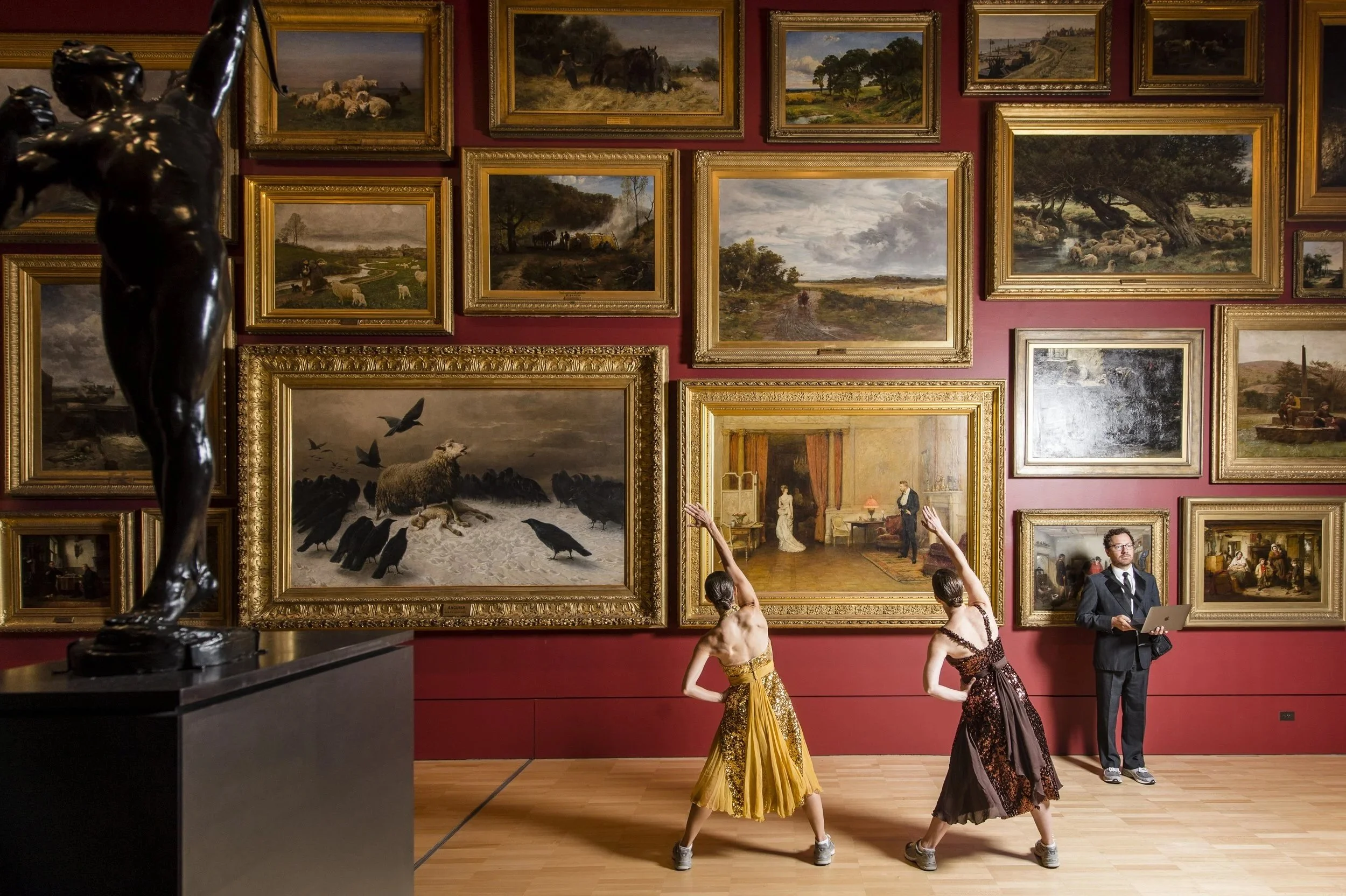
Still from Monica Bill Barnes Dance Company’s Museum Workout, available for booking
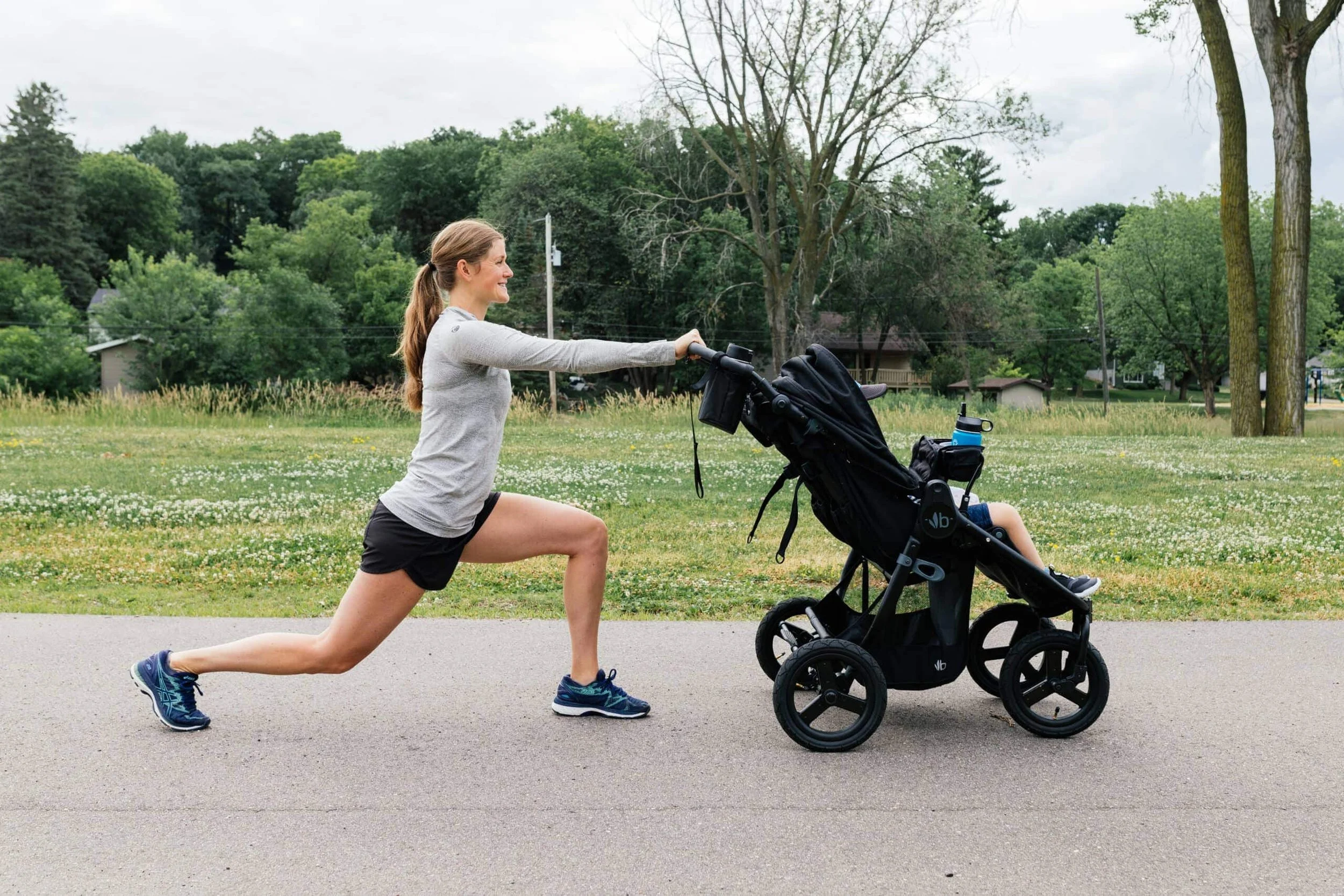
A woman exercising with a stroller and a toddler sits inside.
From the blog, Nourish, Move, Love
We talked about women exercising in parks with strollers. About physical activity in museums — all the places where big bodily movement gets quietly discouraged. We introduced each other to books. I brought in How to Be an Explorer of the World. She brought me Practices for Embodied Living. We talked about absurdity as an opening, about playfulness, about 80s exercise videos, about what it would mean to be imagination trainers. I learned that Marina makes time daily to walk in the woods near her house, to touch trees and feel the sunlight on her face. I talked about the art in my house and introduced my cat, Lafitte.
The through-line, once we found it, was obvious: Marina's research lives in close attention — a way of relating to art that is expansive, romantic, rooted in everyday life. My work increasingly lives in the future, including neuroscience of imagination, in the idea that futures thinking requires you to tolerate not-knowing, to stay open to multiplicity without needing to land somewhere. We both wanted to make something that was embodied, physical without being strenuous and grounded in place.
Where our practices met became Imagini-cise — a portmanteau we loved and eventually let go of — and then Imagination Bootcamp: the idea that imagination is a muscle, that it grows with practice, and that it grows differently in community than alone.
Another commonality: We're both parents. That mattered.
We met with a local friend, Valerie Caruolo, who has done extensive research about flow states and heard first-hand about how she’s designed experiences that encourage and foster exploration within flow. When we started designing the workshop for kids and their adults together, imagining side by side — something clicked. I can’t wait to watch what children and grown-ups unlock in each other. We wanted to highlight the connection between kids and adults, to encourage adults to truly observe and reflect back the creativity they see in their kids, and for kids to get a chance to lead adults in play. We’ve organized these goals under the theme of togetherness.
Lincoln Park seemed like a default choice. Over time, it’s become quite intentional.
It's my neighborhood park — two playgrounds, an informal and unsanctioned dog park, a ripe spot for picnic blankets and sun-tanning in warm weather. It's also Federal land, managed by the National Park Service, which means that since the National Guard has been deployed in DC, there are uniformed soldiers with guns walking through it every day. This incongruousness — militarized Federal space and neighborhood park with broken equipment and dogs whose owners don't clean up after them — felt like exactly the right place to ask questions about what we might imagine together.
There's a sculpture of Abraham Lincoln that drew a lot of local attention during Black Lives Matter — a 19th-century design, paid for by formerly enslaved, free people, in which Lincoln stands upright looking forward, while an enslaved person kneels at his feet with hands outstretched, looking up at him. The power dynamics are not subtle. But what I became more interested in, the more I sat with the park, was the sculpture of Mary McLeod Bethune on the other side. It had been hiding in plain sight for me. Blending into the landscape. Under-recognized even by someone who walks by it regularly.
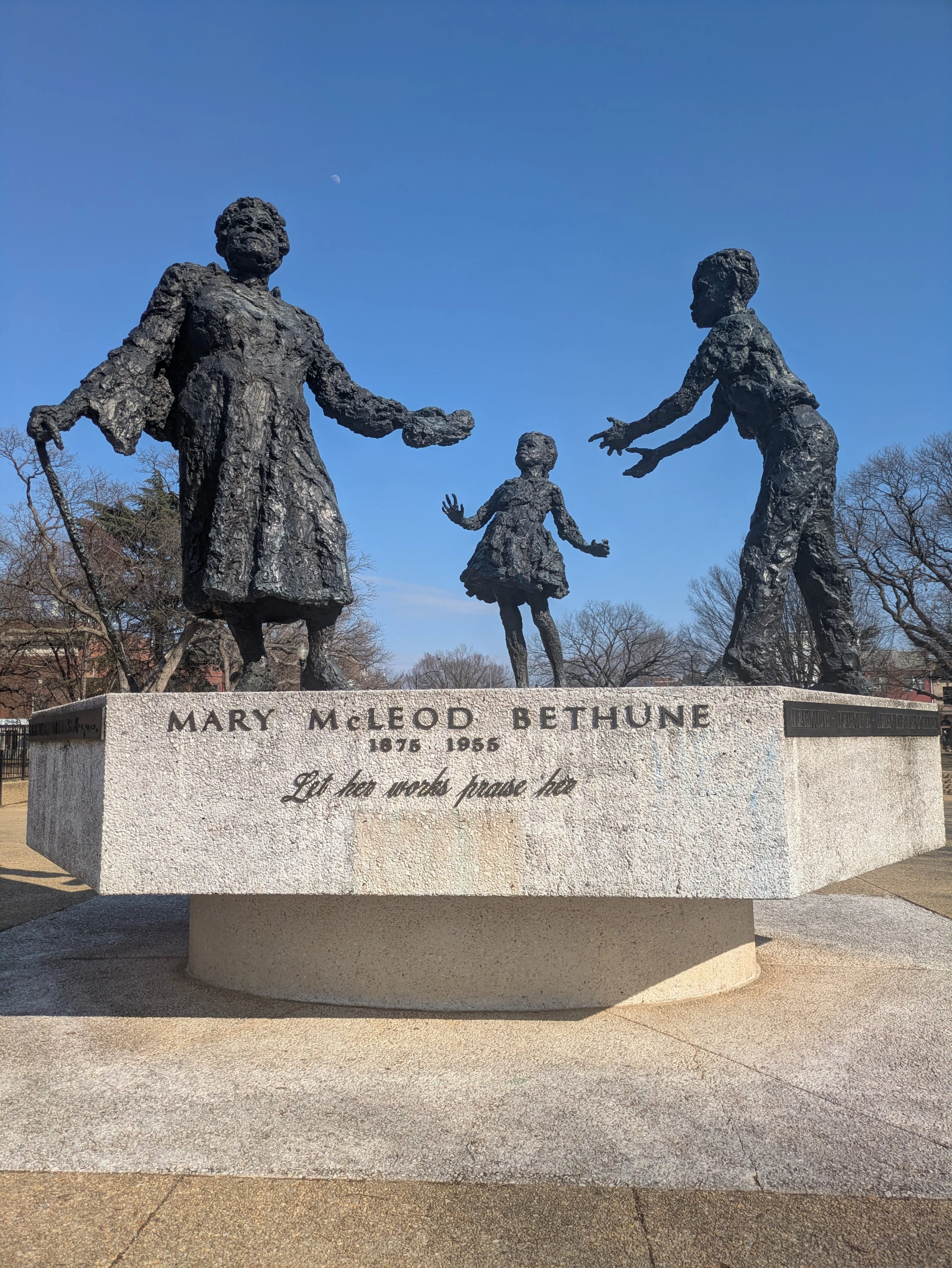
Sculpture in Lincoln Park, photo by author.
That became something to design with: not the loud, controversial object, but the one we keep not quite seeing.
Audio recording of the text on the sculpture, Part 1 and 2
The workshop structure borrowed from the bootcamp metaphor in a way that started to feel genuinely useful rather than just playful.
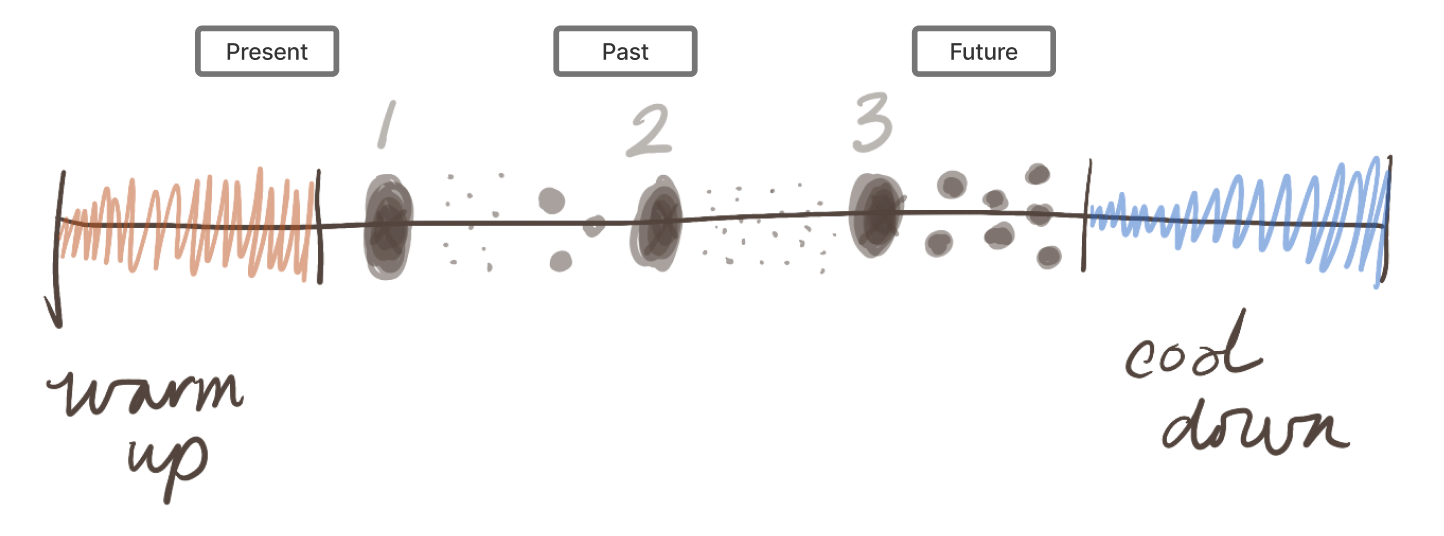
Process sketch by author
We built in a warm-up, a sequence of reps, and a cool-down. Each rep follows a three-part movement drawn from How to Be an Explorer of the World: observe, document, share. The reps themselves are organized by time — not in order, but in a way that builds capacity. We look at the present surroundings. We look at the past. We imagine the future.
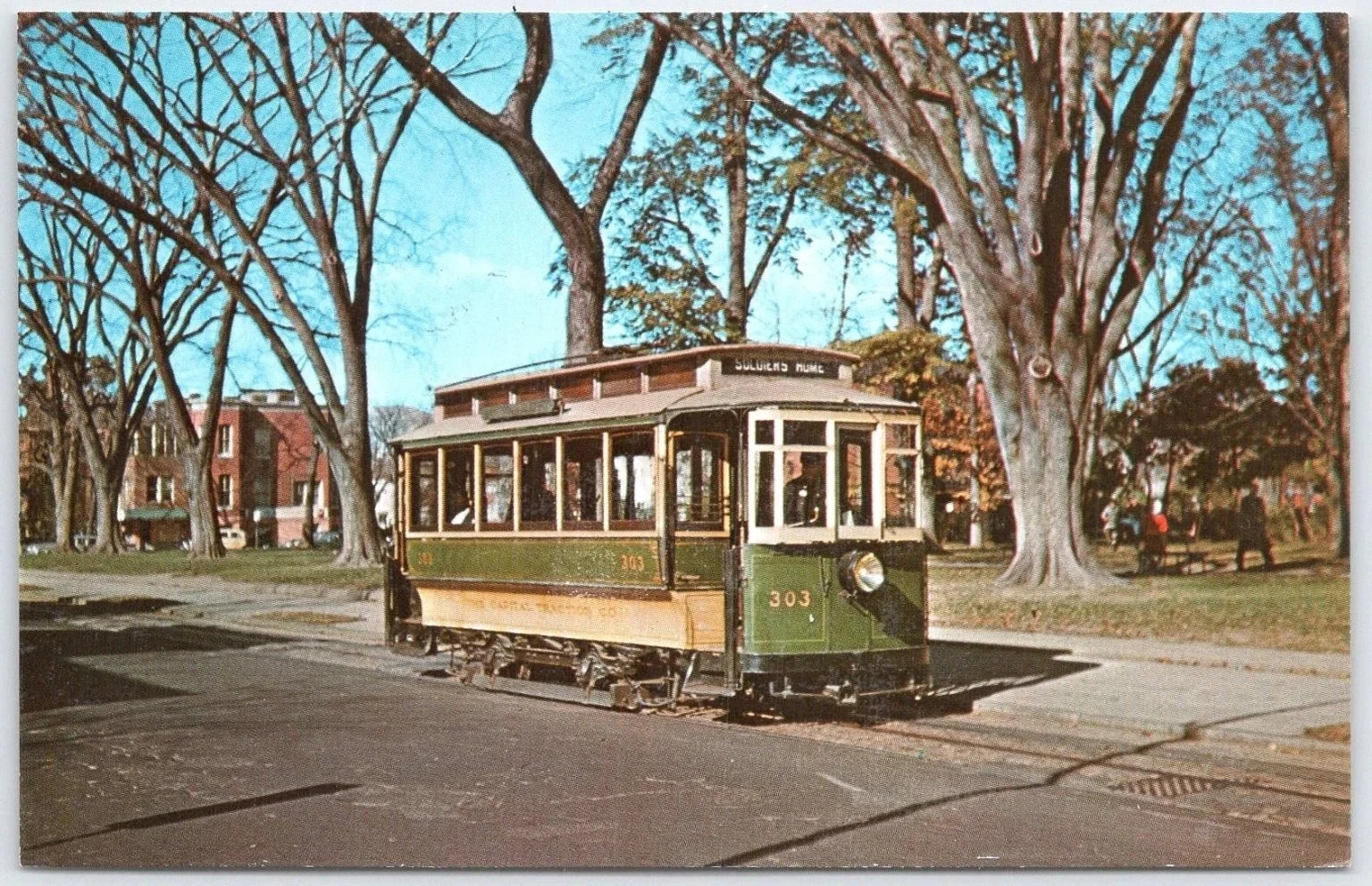
Postcard of trolley next to Lincoln Park, photo by author.
I went digging and found something that surprised me: there used to be a trolley that ran alongside Lincoln Park. There is no evidence of the rails left in the street. I found a postcard on eBay — an actual postcard — and bought it to bring into the workshop as an artifact. A piece of physical proof that the park has already been many things. That change is not hypothetical. It’s always happening! The park we stand in is not the only park this place has been. It was a large military hospital during the Civil War. It was Lincoln's only memorial site in D.C. for many years and people came to this park to pay their respects to Lincoln, until the Memorial we all know was constructed. The landscape plan reveals an organic-ness that has transitioned into rectilinear control. The visitorship, the purpose, the very feel of the space — all of it has shifted across decades.
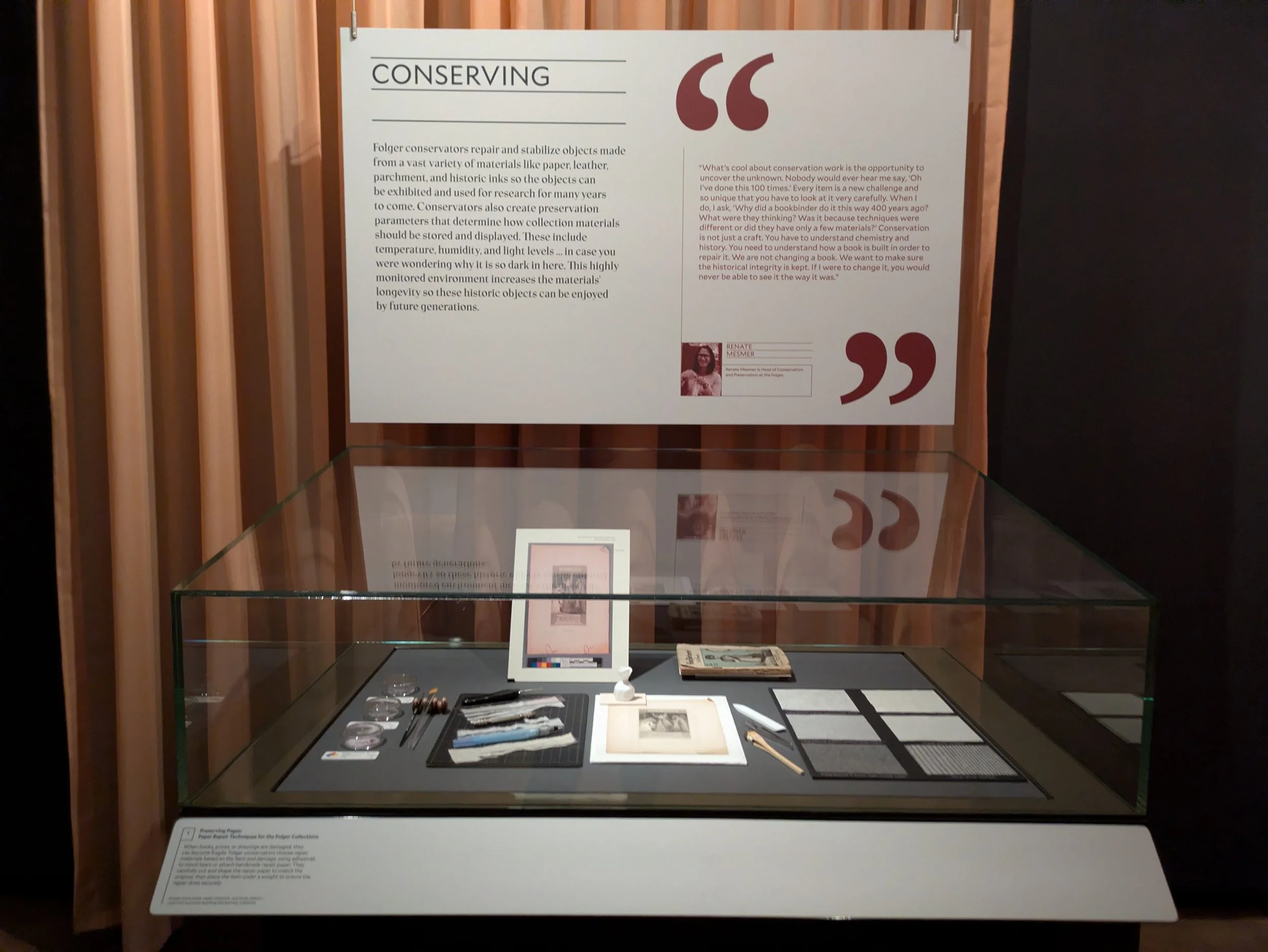
“Conserving” display at Folger Shakespeare Library, photo by author.
For the Folger session — adults, indoors, the theme of mending — we had to think differently about scale.
The Folger Shakespeare Library holds a different kind of space than a park. The movement had to get smaller: so we shifted to hand-sized gestures, ideas around stitching, close, intimate work. We kept asking: what could repair look like if we really imagined it? Not reconstruction of what was, but something genuinely new that care and attention make possible.
We’ve just announced the events, linked below. I've been more lit up about this than I have been about almost anything in a long time.
I'm paying attention to the particular quality of excitement — grounded, not anxious, coming from somewhere true in the body. It usually means I'm building something that belongs to me, not something I'm building for approval. Marina and I are both deeply in love with museums, and we want to offer in these sessions gentle, easy ways of being that people can take with them and use on their own in any spaces that are public with a lower-case p. Throughout the Discovery interviews I've been conducting this past winter, I heard multiple mentions of “I wish museums offered _____.” And I found myself occasionally unable to hold back from saying: “Why don’t you do it yourself?” I hope that this series is a first step in making that agency clear. We aren’t sanctioned by the National Park Service, but we did get a permit. We weren't hired by the Folger Shakespeare Library to lead the workshop, but we did get their permission.
What Marina and I have been doing in our meetings — thinking alongside each other, each of us stretching in response to the other, offering agency in spaces that don’t make agency explicit — is the thing we're trying to make space for in the workshops themselves.
We're anticipating that this is the first iteration of what we hope becomes a series. Right now it’s pizza in a park and visiting my favorite neighborhood museum.
But I'll be watching what this small, deliberate beginning carries. I'm paying close attention.
Imagination Bootcamp: Togetherness — for adults and kids of all ages — takes place March 23 at Lincoln Park, Washington DC.Imagination Bootcamp: Mending — for adults — takes place March 25 at the Folger Shakespeare Library.Both sessions are led by Isabella Bruno and Marina Gross-Hoy. $5 donation for pizza or museum ticket respectively. Open to all.